
Second Hand Skipping Or Stuttering: What It Means and How to Check It
 11 min read
2,166 words
11 min read
2,166 words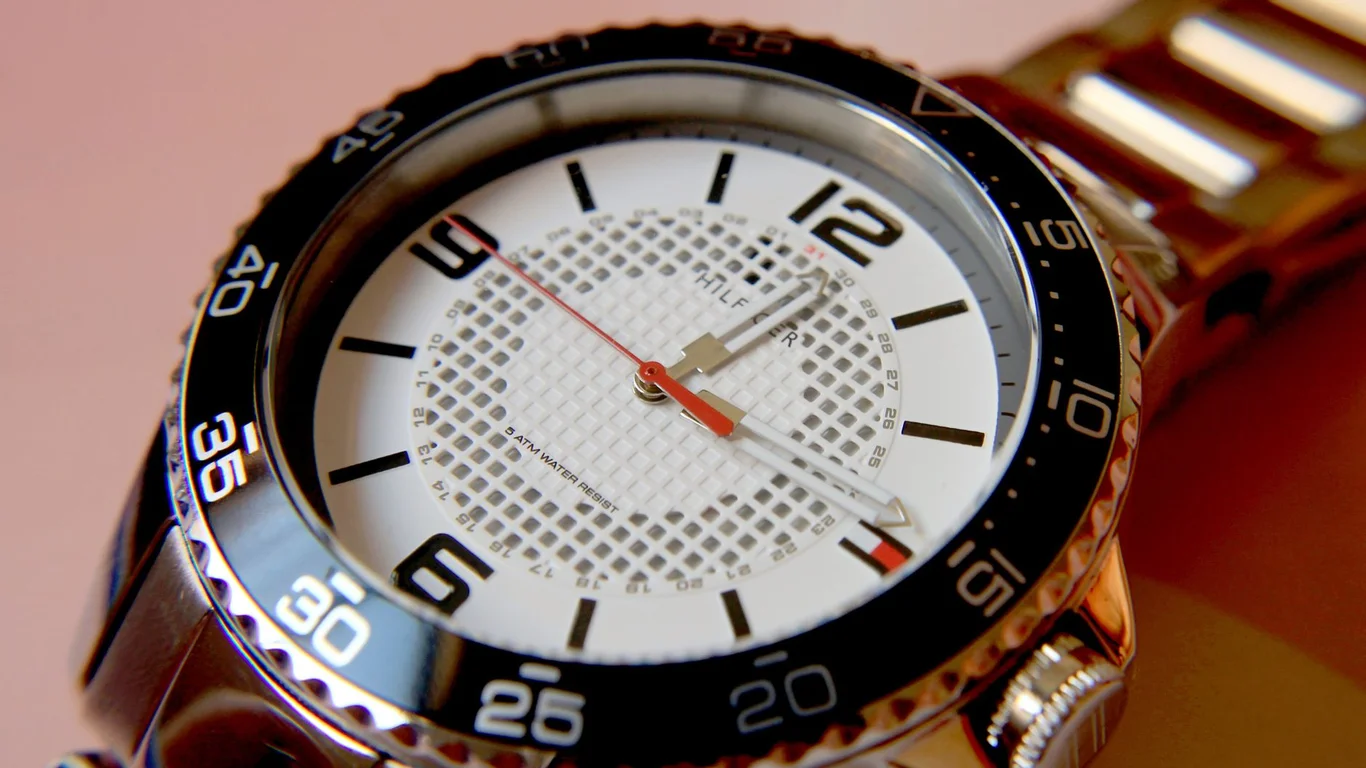
You’re sitting there, watching your watch tick, and something feels… off. The seconds hand isn’t sweeping smoothly. It skips a beat, stutters forward, or hesitates for a fraction of a second before jumping ahead. Maybe it’s catching on something, or maybe it’s just moving in a jerky, uneven rhythm. If you’re staring at your wrist wondering whether this is a minor annoyance or the beginning of a costly repair, you’re in the right place. This guide is built for the moment you’re watching the symptom happen in real time, and you need to know what it means and what to do next.
The first thing to understand is that second hand skipping or stuttering means something fundamentally different depending on whether your watch is quartz or mechanical. In a quartz watch, a stuttering seconds hand often points to a dying battery. In a mechanical watch, the same visual symptom usually signals a problem with power delivery, movement health, or physical obstruction. We’ll cover both, but since this is a visible, specific symptom you can see right now, let’s start with the quickest fixes first.
Low Power Reserve — The Most Common and Least Serious Cause
If you own an automatic or hand-wound mechanical watch, the most likely reason for a stuttering or skipping seconds hand is simply that the mainspring is running low on energy. Think of it like a car sputtering when it’s almost out of gas. When power reserve drops below a certain threshold, the amplitude of the balance wheel falls off, and the gear train no longer receives consistent torque. The seconds hand can hesitate for a fraction of a second, then jump forward as the escapement finally releases.
This is especially common if you’ve worn the watch only intermittently or took it off overnight. Many modern automatics offer 38 to 70 hours of power reserve, but if you’re only wearing it for a few hours a day, you might be draining the reserve faster than you’re replenishing it.
Before you do anything else, fully wind the crown manually (30 to 40 turns for most automatics) and set the watch down for an hour. If the seconds hand smooths out, your problem was simply low power reserve. This is the cheapest fix in watch repair — it costs nothing and takes two minutes.
If the stutter persists even after a full wind, the issue is deeper than just a depleted mainspring. But for roughly one in three cases of a hesitant seconds hand, this is the entire explanation. Don’t skip this check.
Hands Physically Touching Each Other or the Crystal
Another common cause of a watch hand catching or stuttering is physical interference. The seconds hand might be slightly bent, or it might have shifted on its cannon pinion during a drop or knock. When it rotates, it brushes against the minute hand, the hour hand, or the underside of the crystal. This creates a visible hesitation or skip at a specific point in the hand’s rotation.
Here’s how to check for this at home: Look at the seconds hand as it passes the 12 o’clock position, then the 3, 6, and 9 positions. Does the stutter happen at the same spot every time? If you see a consistent catch point, you’re likely dealing with a hand that’s physically contacting something. You might even hear a faint scraping sound if you hold the watch close to your ear.
Do not try to bend the seconds hand back into place with tweezers or a toothpick unless you have watchmaking experience. The hands are soft metal and bend easily, but they also break easily. A bent hand is a job for a watchmaker with proper hand-removing tools and a staking set. Attempting a DIY fix here can turn a $50 alignment job into a $200 hand replacement.
If the interference is with the crystal, you might notice the hand stuttering only when the watch is face-up versus face-down. That’s a clue that the hand is too high and touching the glass. In that case, the hand needs to be reinstalled at the correct height — again, a watchmaker’s task.
Low Amplitude From a Dirty or Unserviced Movement
Even if your watch is fully wound and the hands are clear of each other, a seconds hand not smooth automatic can still stutter. The culprit here is often low amplitude caused by dried-out lubricants, contamination, or general wear inside the movement. Amplitude is the measure of how far the balance wheel swings back and forth. A healthy mechanical movement at full wind typically shows amplitude between 250 and 310 degrees. Below about 220 degrees, the balance wheel starts to lose stability, and the seconds hand can visibly hesitate or stutter.
This is especially common in watches that haven’t been serviced in five to seven years. The lubricants in the mainspring barrel, the train of wheels, and the escapement thicken or dry out, creating friction. The movement simply can’t deliver consistent power to the escape wheel, and the seconds hand pays the price.
Low amplitude doesn’t always show up as a stutter on the seconds hand. Sometimes it just makes the watch run consistently slow. But when the amplitude drops far enough, the stutter becomes visible to the naked eye — and that’s your movement telling you it needs service.
You can’t measure amplitude yourself without a timing machine, but you can check for other signs: Does the watch lose more than 15-20 seconds per day? Does the seconds hand stutter more when the watch is lying flat versus on its side? If yes, low amplitude from a dirty movement is a strong candidate. This requires a full service — disassembly, cleaning, re-oiling, and regulation.
A Genuinely Stuck or Bent Second Hand (Mechanical Obstruction)
Sometimes the problem isn’t subtle. The seconds hand might actually stop moving entirely for several seconds before jerking forward, or it might get stuck at one position and refuse to move past it. This is a watch second hand jumping scenario caused by a physical obstruction, not a power issue.
Common causes include: a bent pivot on the seconds hand itself, a loose cannon pinion that’s slipping, or debris (a tiny fiber, a speck of dust, or a loose screw) lodged in the gear train. A bent hand can catch on the minute hand or the dial at a specific point. A loose cannon pinion means the hand slips instead of advancing smoothly, causing random jumps.
If the hand stops completely at the same position every time, you’re almost certainly dealing with a mechanical obstruction. This is not a home-fixable issue for 99% of owners. Opening the case to investigate risks introducing more dust, bending other hands, or damaging the dial. A watchmaker will remove the hands, inspect the pinion and pivot, and replace or repair the damaged part.
If the seconds hand stops completely for more than a few seconds, stop shaking or tapping the watch. Forcing a stuck hand can damage the delicate pivots of the gear train, turning a simple hand replacement into a full movement rebuild. Set the watch down and call a professional.
Quartz vs Mechanical: This Symptom Means Something Different
We touched on this earlier, but it deserves its own section because the diagnosis is completely different. If your watch is quartz, a stuttering or skipping seconds hand is almost always a battery issue. Quartz movements use a stepper motor to advance the seconds hand in discrete steps. When the battery voltage drops below a certain threshold, the motor can’t deliver enough power to move the hand consistently. The result is a hand that hesitates, jumps, or even ticks in double-steps.
Some quartz watches have an “end-of-life” indicator where the seconds hand jumps in four- or five-second intervals to warn you the battery is dying. That’s normal behavior — it’s the watch telling you to change the battery. But if the hand is stuttering irregularly, not just jumping in predictable intervals, the battery might be completely drained or the movement could have a failing coil.
| Symptom | Quartz Likely Cause | Mechanical Likely Cause |
|---|---|---|
| Hand stutters only at low power | Battery nearing end of life | Low mainspring power reserve |
| Hand stutters at same spot each rotation | Bent hand or debris on gear | Bent hand or hand touching crystal |
| Hand jumps irregularly, not in set intervals | Battery voltage too low for stepper motor | Low amplitude from dirty movement |
| Hand stops completely, then jerks forward | Dead battery or failing motor coil | Stuck or bent hand, or loose cannon pinion |
| Hand moves in 4-5 second jumps | End-of-life battery indicator (normal) | Not applicable |
For a quartz watch, the first step is a fresh battery. If the stutter continues after a battery change, the movement likely has a damaged stepper motor or a broken gear. At that point, replacing the entire quartz movement (often $20 to $50 for standard calibers) is usually cheaper than repairing it. For a mechanical watch, the same symptom almost never points to the battery — because there isn’t one. The diagnosis is always mechanical in nature.
Quick Checks You Can Do Before Assuming the Worst
Before you pack your watch off to a watchmaker, there are several safe, non-invasive checks you can perform at home. These won’t void your warranty or risk damaging the movement, and they might save you a service bill.
Check 1: Manual wind test. Fully wind the crown (if automatic) and observe the seconds hand for 10 minutes. If it smooths out, the issue was low power reserve. If it still stutters, move on.
Check 2: Position test. Lay the watch flat (dial up), then turn it on its side (crown down), then flat with the case back up. Does the stutter change or disappear in any position? If it smooths out in one position, the problem may be positional amplitude loss — still a service issue, but less urgent.
Check 3: Visual alignment. Use a loupe or a phone camera with macro mode. Look at the gap between the seconds hand and the minute hand. Is there a visible clearance? Look at the tip of the seconds hand as it passes the crystal. Does it seem to touch the glass? If you see contact, the hand needs resetting.
Check 4: Consistency test. Note the exact second when the stutter occurs. Does it happen at the same second mark every time? If yes, it’s a physical obstruction. If random, it’s more likely a power or amplitude issue.
For quartz watches, the quickest check is the simplest: replace the battery yourself or at a jeweler. If the hand still stutters, the movement is likely faulty. Given the low cost of many quartz movements, a full movement swap is often the most economical fix.
If after these checks you’re still seeing the stutter, it’s time to involve a professional. The good news is that most causes of a stuttering seconds hand — low power reserve, a bent hand, or a simple battery — are relatively inexpensive to fix. The bad news is that ignoring the symptom can make it worse. A stuttering hand that’s caused by a loose cannon pinion can eventually damage the gear train, turning a $100 repair into a $400 service.
Watch the symptom, run the checks, and act accordingly. A stuttering seconds hand is your watch’s way of telling you something is wrong — and with the right diagnosis, you can decide whether it’s a quick fix or a trip to the bench.
Frequently Asked Questions
Is a stuttering second hand always a sign of low battery or low power reserve?
Not always. While low battery in a quartz watch or low power reserve in a mechanical is the most common culprit, a stuttering hand can also result from physical obstructions like a bent hand touching the crystal or another hand, a loose cannon pinion, or even a magnetized hairspring. The key is to rule out power issues first by replacing the battery or fully winding the watch before investigating other causes.
Can I fix a second hand that’s touching another hand myself?
Yes, but only if you have the right tools and a steady hand. Using a hand-setting tool or a pegwood, you can gently nudge the stuttering hand back into alignment if it’s simply bent or rubbing against a neighboring hand. However, if the hand is severely bent or the issue involves the cannon pinion, it’s safer to take it to a watchmaker — one wrong move can scratch the dial or damage the movement.
Does a skipping second hand mean the movement needs a full service?
Not necessarily — a full service is usually the last resort, not the first diagnosis. In many cases, the skip is caused by a simple fix like a fresh battery, a demagnetizing treatment, or a minor hand adjustment. Only if those checks fail and the skip persists — especially with random timing or a dead seconds hand — does a full movement service or replacement become necessary.
🛒 Shop Compatible Parts
Prices and stock verified daily by our affiliate partners. As an affiliate, WatchPartsFit may earn a commission on qualifying purchases at no extra cost to you.
Check Compatibility First →
watchpartsfit
WatchPartsFit editor covering mechanical watch strap compatibility, movement repair, and part-replacement guides.