
Rolex Explorer Strap Size: Compatibility Guide
 10 min read
1,835 words
10 min read
1,835 words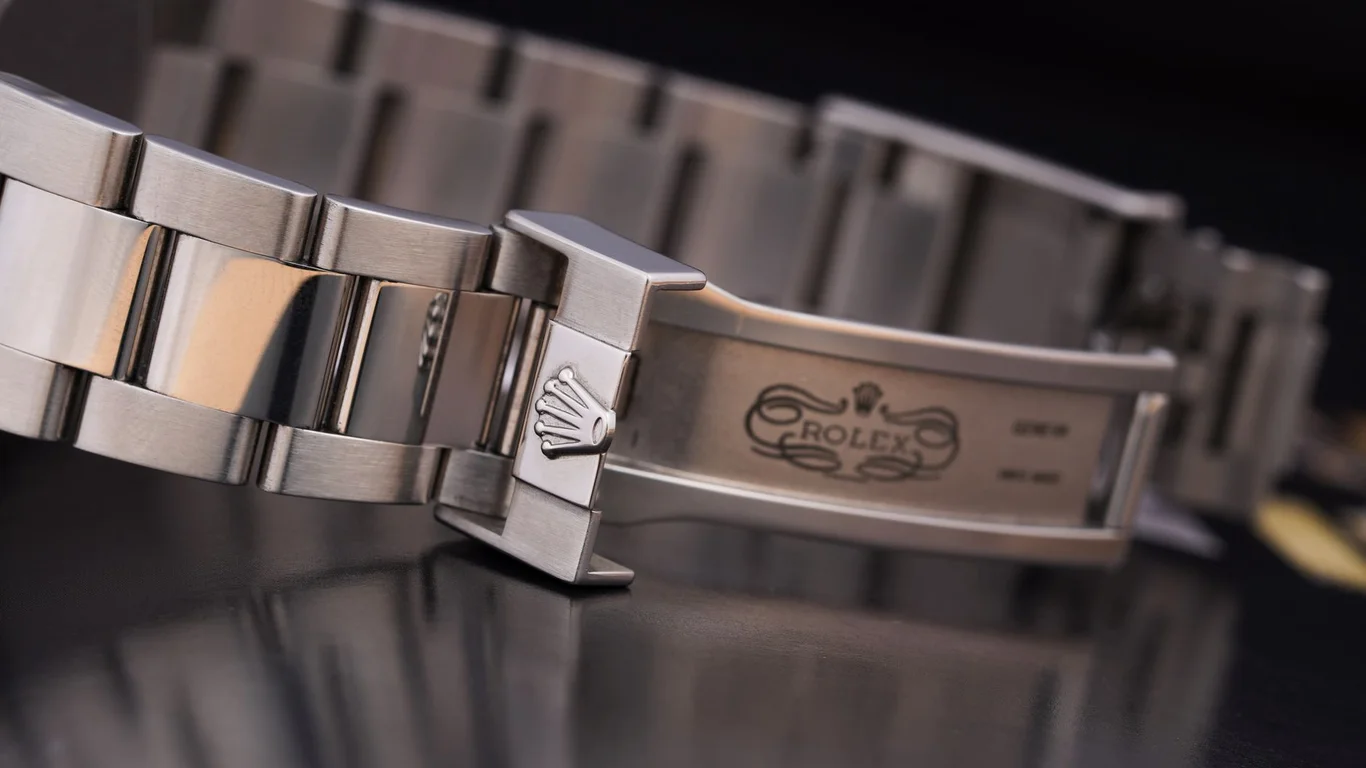
If you’re staring at your Explorer 124270 or 214270, wondering whether that vintage leather NATO you’ve had your eye on will actually fit, you’re in the right place. The Explorer is one of Rolex’s most understated icons, but its strap compatibility isn’t always as simple as “20mm and go.” Get it wrong, and you’re either staring at a gap between the lugs or worse — a scratched-up case back from a spring bar that was just a hair too thick.
This guide is built for you as an Explorer owner. Not a general “how to measure a watch” article. You want the exact lug width, the exact end-link fitment quirks, and the exact material options that make sense for a watch that’s equally at home on a mountain trail or in a boardroom. Let’s get concrete.
Exact Lug Width for the Rolex Explorer — And the One Reference That Breaks the Rule
The good news: every modern Rolex Explorer uses a 20mm lug width. That includes the current 124270 (36mm), the previous 214270 (39mm), and the older 14270 and 114270 (both 36mm). You can confidently buy any 20mm strap and know the spring bars will seat properly — assuming you’re using the correct spring bar diameter.
The one exception you need to know about: the Explorer II (ref. 16570, 216570, 226570) uses a 22mm lug width. If you own an Explorer II, this guide isn’t for you — but if you’re reading this on an Explorer I page, you’re safe at 20mm.
Good to know:
The Explorer’s lug width has been 20mm since the ref. 1016 was introduced in 1963. Rolex didn’t change it for the 14270 in 1989, the 114270 in 2001, or the 214270 in 2010. Consistency is rare in watchmaking — enjoy it.
Spring Bar Size Matters Too
While the lug width is 20mm, the spring bar diameter (the thickness of the bar itself) varies. Rolex typically uses 1.8mm or 2.0mm spring bars on the Explorer. Aftermarket straps often come with 1.5mm bars, which can feel loose in Rolex’s tight lug holes.
If you’re switching from the original bracelet, keep the Rolex spring bars — they’re double-shouldered and designed to prevent the strap from shifting. If you lose them, buy 1.8mm or 2.0mm bars specifically. A 1.5mm bar will work, but it’ll rattle and could scratch the inside of the lugs over time.
Why This Model Needs Its Own Page — High Resale Value Means High Stakes
The Explorer isn’t a $200 Seiko. A clean 124270 retails for over $7,000, and even a well-worn 14270 fetches $4,000+. That value makes owners cautious — and rightfully so. One slip with a spring bar tool, and you’ve got a gouge in the lug that drops the resale value by hundreds of dollars.
This is why we’re not giving you generic advice. When you’re working on a watch worth five figures, “close enough” on strap fitment isn’t acceptable. You need to know exactly what works, what doesn’t, and where adapters become necessary.
Caution:
Never use a standard spring bar tool on an Explorer without taping the lugs first. A single slip can leave a permanent scratch. Use a Bergeon 7825 or similar tool with a forked tip, and always work over a soft surface.
Bracelet End-Link Fit — Switching from the Oyster Bracelet to a Strap
The Explorer comes on Rolex’s Oyster bracelet, which has solid end links (SELs) that fit flush against the case. When you remove the bracelet, you’ll see the lug holes are not drilled through — they’re blind holes on the inside of each lug. This is standard for modern Rolex, and it means you can’t push a spring bar out from the outside.
Here’s the fitment nuance: the Explorer’s lugs are slightly curved, and the gap between them is precisely 20mm. Most aftermarket straps are cut straight at 20mm, which means you’ll see a tiny gap at the spring bar if the strap isn’t tapered or contoured. This is cosmetic — the strap will function fine — but if you’re a perfectionist, look for straps labeled “curved end” or “Rolex-specific.”
Do You Need Adapters?
No. The Explorer uses standard spring bars with no proprietary attachment. Unlike an Omega Seamaster or a Grand Seiko, there’s no integrated lug design. You can mount any 20mm strap directly.
The one exception is if you’re trying to fit a 22mm strap (which some owners do for a bulkier look). That requires a 20mm-to-22mm adapter, which adds thickness and can look clumsy on the Explorer’s slim case. We don’t recommend it — the Explorer’s charm is its clean proportions.
| Bracelet/Strap Type | Fit Note | Adapter Needed? |
|---|---|---|
| Rolex Oyster bracelet (original) | Solid end links, flush fit | No |
| 20mm leather or NATO strap | Straight cut, small gap possible | No |
| 20mm curved-end strap | Flush fit, no gap | No |
| 22mm strap | Overhangs lugs, bulky look | Yes (not recommended) |
| Rubber strap (20mm) | Straight cut, may require curved spring bars | No |
Best Material Options for the Explorer — Based on How You Actually Wear It
The Explorer is a tool watch at heart, but it’s also a luxury piece. Your strap choice should reflect how you use it. Here’s the breakdown by material, with specific recommendations for this model.
Leather — The Dress-Up Option
The Explorer on a brown leather strap is a classic combo. It dresses down the watch without making it feel cheap. Look for Horween Chromexcel or Shell Cordovan in medium brown or black. Avoid padded leather — the Explorer’s case is thin, and a thick strap makes it look top-heavy.
One caveat: the Explorer is water-resistant to 100 meters. Leather doesn’t like water. If you’re actually hiking or swimming, skip leather.
NATO — The Rugged Choice
A 20mm NATO strap is the Explorer’s natural habitat. It’s what the watch was designed for — originally as a tool for explorers (hence the name). Single-pass NATO straps sit thinner and keep the watch closer to your wrist. Zulu straps (with heavier hardware) add a bit more heft.
The key fit note: NATO straps are 20mm at the lugs but often taper to 18mm or 16mm at the buckle. That’s fine — it’s the standard NATO profile. Just make sure the strap isn’t thicker than 1.5mm at the spring bar, or it’ll be hard to thread through the lugs.
Rubber — The Active Option
Rubber straps for the Explorer are popular in the modding community. Brands like Crafter Blue and Rubber B make curved-end rubber straps that fit the Explorer’s case perfectly. These are expensive ($150–$250) but eliminate the gap issue entirely.
If you go with a straight-cut rubber strap, you’ll need curved spring bars to prevent the strap from bulging away from the case. Standard straight spring bars work, but the fit won’t be as clean.
Fabric/Canvas — The Lightweight Option
Canvas or sailcloth straps are a good middle ground — lighter than leather, more breathable than rubber, and more durable than NATO. They’re great for summer wear. Look for ones with a leather backing to prevent fraying at the spring bar holes.
Tip:
If you’re unsure which material to start with, buy a $20 NATO strap first. It’s the cheapest way to test the 20mm fitment, and if you hate it, you’re out the cost of lunch instead of the cost of a custom leather strap.
Attachment Type Notes — Quick-Release, Drilled Lugs, and Spring Bar Compatibility
The Explorer’s lugs are not drilled. This is a sticking point for some owners who are used to vintage watches or Seiko divers where you can push a spring bar out with a toothpick. On the Explorer, you need a spring bar tool with a forked tip — or you need to use quick-release spring bars.
Quick-Release Spring Bars — Yes, They Work
Many aftermarket straps come with quick-release spring bars built in. These have a small lever that lets you remove the strap without tools. They work fine on the Explorer — the lug holes are standard size, and the quick-release mechanism doesn’t interfere with fitment.
The downside: quick-release bars are typically 1.5mm thick. They’ll work, but they won’t feel as solid as Rolex’s OEM 1.8mm bars. If you’re switching straps frequently (say, for a different look each day), quick-release is worth the trade-off. If you’re setting it and forgetting it, stick with Rolex bars.
Drilled Lugs — Not on the Explorer
Some owners drill their own lugs to make strap changes easier. Don’t do this. It voids any warranty, destroys resale value, and the Explorer’s case is thin enough that drilling can compromise water resistance. If you want drilled lugs, buy a vintage Tudor or a Sinn.
Comparison Table: Strap Material x Fit Note x Typical Use Case for the Explorer
| Material | Fit Note | Typical Use Case | Best For |
|---|---|---|---|
| Leather (Horween/Shell) | Straight cut, slight gap; curved-end available | Office, dinner, light travel | Dressing up the Explorer |
| NATO (single-pass) | 20mm lugs, tapers to buckle | Hiking, daily wear, swimming | Rugged tool watch look |
| Zulu (heavy-duty) | 20mm, thicker hardware | Outdoor adventures, camping | Extra durability |
| Rubber (curved-end) | Flush fit, no gap | Swimming, gym, hot weather | Active lifestyle |
| Rubber (straight-cut) | Gap possible, use curved spring bars | Budget active option | Cost-conscious modding |
| Canvas/Sailcloth | Straight cut, leather backing recommended | Summer, casual, travel | Lightweight alternative |
| Bracelet (Oyster) | OEM, flush fit | All-day, every day | Original look, highest resale |
Final Thoughts Before You Buy
The Rolex Explorer strap size question has a simple answer — 20mm — but the nuance comes in the details. Spring bar thickness, end-link fit, and material choice all affect how the watch wears and how much you enjoy it. Don’t rush the decision. Buy one strap at a time, wear it for a week, and see how it feels.
Your Explorer is a watch that will outlast you if you take care of it. A well-chosen strap is the easiest way to make it feel like new again — without spending thousands on a different watch. Measure once, buy smart, and enjoy the process.
Frequently Asked Questions
Is the lug width the same across every Rolex Explorer reference and generation?
Yes, every Rolex Explorer reference — from the original 1016 through the modern 124270 and 224270 — uses a 20mm lug width. The one exception is the Explorer II line, which jumps to 22mm on the 16570 and 216570 references. If you’re working with a standard Explorer, your strap size is 20mm regardless of the year, no need to double-check the reference number.
Does switching from the stock bracelet to a strap on a Rolex Explorer require an adapter?
No adapter is needed for the vast majority of straps. Since the Explorer uses standard 20mm spring bars and has drilled lug holes on most references, you can simply remove the bracelet and install any 20mm strap directly. The only exception is if you’re fitting a curved-end rubber strap — those are designed to mimic the bracelet’s end-link shape and don’t require any special hardware either.
What’s the most popular aftermarket strap choice for the Rolex Explorer?
Leather is by far the most popular aftermarket choice, specifically a dark brown or black calfskin or Horween leather strap with a tapered profile. It complements the Explorer’s tool-watch roots while adding a dressed-down versatility that the stock Oyster bracelet can’t match. Many enthusiasts also gravitate toward NATO straps for a rugged, military-inspired look, especially on vintage 1016 and 14270 references.
🛒 Shop Compatible Parts
Prices and stock verified daily by our affiliate partners. As an affiliate, WatchPartsFit may earn a commission on qualifying purchases at no extra cost to you.
Check Compatibility First →
watchpartsfit
WatchPartsFit editor covering mechanical watch strap compatibility, movement repair, and part-replacement guides.