
200m+ / Dive-Rated (ISO 6425) Water Resistance Meaning: What It Actually Means
 11 min read
2,107 words
11 min read
2,107 words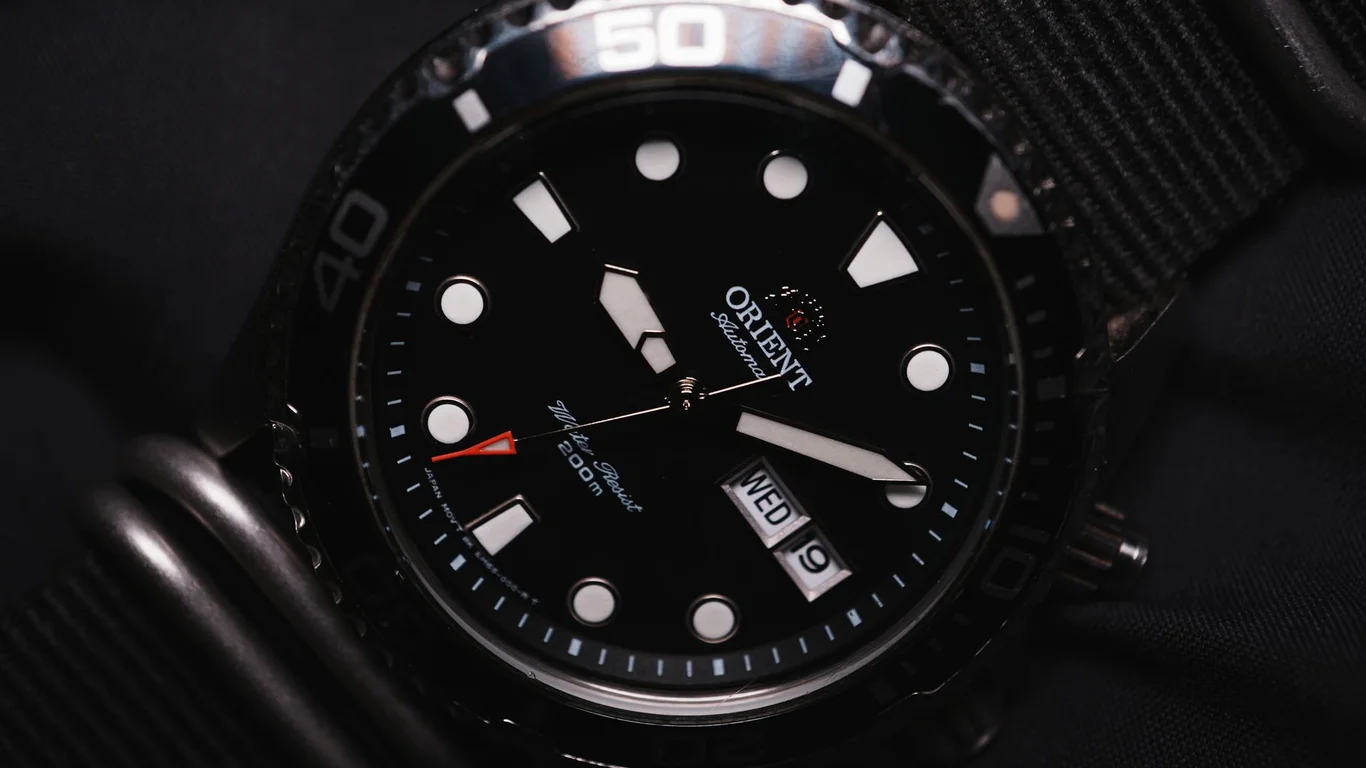
You just strapped on a watch that says “200m / 660ft” or “Diver’s 200m” on the dial. Maybe it arrived this morning, or maybe you’ve owned it for years and are finally getting ready to take it into the water. That number looks reassuringly big, but if you’re like most owners, you have a nagging question: Does “200m water resistance” actually mean you can dive to 200 meters?
The short answer is no, and the slightly longer answer is where most of the confusion lives. This guide will walk you through what that rating actually means, what you can safely do with your watch, and — most importantly — when you should absolutely not trust that number anymore. Let’s get into it.
What 200m+ / Dive-Rated (ISO 6425) Technically Means
The number on your dial isn’t a depth guarantee — it’s a static pressure rating from a lab test. Watchmakers take a brand-new watch, seal it up, and submerge it in a pressure vessel filled with water. They increase the pressure to the equivalent of 200 meters of depth (about 20 atmospheres, or 20 bar) and hold it there for a set duration. If no water gets in, the watch passes.
Here’s the catch that rarely makes it onto the marketing page: That test is performed on a dry, room-temperature watch with brand-new gaskets, perfectly seated caseback, and a crown that’s been screwed down tight. It’s a static test — no movement, no temperature swings, no aging parts. It’s measuring the watch’s ability to resist pressure, not its ability to function at that depth in real-world conditions.
The “200m” rating is the pressure equivalent of 200 meters of seawater. But because the test is static and performed on a new watch, the actual safe depth for repeated use is typically much lower — often around 80-100 meters for a 200m-rated watch in good condition.
The real standard that matters for dive watches is ISO 6425. This isn’t just a pressure test — it’s a full suite of tests that includes water resistance at depth, thermal shock resistance, condensation testing, and functionality of the timing device (like the rotating bezel). A watch that’s “Dive-Rated” or “ISO 6425” has passed all of these, not just the pressure test.
What’s Actually Safe: Genuine Scuba-Diving Rated
If you’re a recreational scuba diver, a 200m ISO 6425-rated watch is exactly what you need. The standard is designed for exactly that use case: repeated submersion to depths of 30-40 meters (the typical recreational diving limit) over the life of the watch. The thermal shock test, for example, simulates jumping into cold water after being in the sun — a real-world scenario that static lab tests don’t cover.
For practical purposes, here’s what a 200m / Dive-Rated (ISO 6425) watch can handle safely, assuming the gaskets are in good condition and the crown is fully screwed down:
- Recreational scuba diving to depths up to 40 meters (130 feet) — well within the rating’s safety margin
- Snorkeling and freediving at any depth you’re likely to reach
- Swimming, showering, and hot tubs — but with caveats (see the temperature section below)
- High-impact water sports like surfing, waterskiing, or jet skiing
Even a 200m-rated watch can fail if you operate the crown or pushers underwater. Always ensure the crown is fully screwed down before submersion. If your watch has screw-down pushers, they need to be tightened as well.
The key difference between a 200m watch and a lower-rated one is the safety margin. A 100m watch might survive a shallow dive, but it’s not designed for the repeated pressure cycles that come with regular diving. The 200m ISO 6425 watch is built with thicker gaskets, a more robust case construction, and a screw-down crown that’s actually tested for underwater use.
Typical Watches at This Tier: Dedicated Dive Watches and Dive-Certified Sport Watches
Not all 200m-rated watches are created equal. There’s a meaningful difference between a “200m water resistant” watch that’s never been ISO certified and a true “Diver’s 200m” watch that carries the certification. Here’s what you’ll typically find at this level:
- True ISO 6425 dive watches: Brands like Seiko (the Prospex line), Citizen (Promaster), and many Swiss manufacturers (Longines, Oris, Tudor) produce watches that are genuinely certified. These have a unidirectional rotating bezel, luminous markers, and a screw-down crown that’s part of the certification.
- Dive-style sport watches: Many watches from brands like Omega, Rolex, and Breitling carry 200m+ ratings and are used for diving, though not all have the ISO certification paperwork. In practice, they’re built to the same or higher standards.
- Affordable certified options: The Seiko SKX007 and its successors, the Citizen NY0040, and the Orient Mako/Kamasu series are all genuine ISO 6425 dive watches at accessible prices. They prove that certification isn’t just for luxury brands.
The visual tell is usually the presence of a screw-down crown and a rotating bezel with clear minute markings. If your watch has a push-pull crown (one that you just pull out without unscrewing), it’s almost certainly not a true dive watch, regardless of what the dial says.
Why Age, Gasket Condition, and Temperature Change All Reduce Real-World Resistance Over Time
This is the part that catches most owners off guard. Your watch left the factory with perfect gaskets, but those gaskets are rubber or silicone components that degrade over time. They dry out, they compress, they pick up dirt and salt crystals. And they do it whether you’re wearing the watch or not — a watch sitting in a drawer for five years can have gaskets that are just as compromised as one that’s been worn daily.
Temperature is another silent killer. Hot water causes the air inside your watch case to expand, which increases internal pressure. If the gaskets are marginal, that pressure can push past them. This is why showering with a watch is riskier than swimming in a pool — the temperature change is more abrupt, and the steam can penetrate seals that water alone wouldn’t.
Steam is a particular threat to water resistance. It has smaller molecules than liquid water and can slip past seals that would hold perfectly well against immersion. If you shower with your watch regularly, you’re accelerating gasket degradation even if no water visibly enters the case.
Impact also matters. A hard knock on a door frame, dropping the watch on a tile floor, or even the repeated shock of a golf swing can shift the crystal or crown stem just enough to break the seal. A 200m watch that’s been dropped once might only be safe for hand washing until it’s re-tested.
Comparison Table Across All Common Ratings
Here’s a quick-reference table to see how your 200m watch compares to other common ratings. Remember: these are new watch estimates — actual safety depends on gasket condition, age, and temperature.
| Dial Rating | Equivalent Pressure | Safe Activities (new watch) | Not Safe For |
|---|---|---|---|
| 30m / 3 ATM | 3 bar | Splashes, rain, hand washing | Swimming, showering, any submersion |
| 50m / 5 ATM | 5 bar | Shallow swimming, showering | Diving, snorkeling, high-impact water sports |
| 100m / 10 ATM | 10 bar | Snorkeling, swimming, recreational diving (shallow) | Scuba diving beyond 10m, high-pressure water jets |
| 200m / 20 ATM (ISO 6425) | 20 bar | Scuba diving, snorkeling, swimming, water sports | Deep saturation diving, high-pressure cleaning |
| 300m+ / 30 ATM+ | 30 bar+ | Professional diving, saturation diving (with helium valve) | Extreme depth beyond rating, abuse |
The “ATM” (atmosphere) rating is equivalent to “bar” — 1 ATM = 1 bar = roughly 10 meters of static water pressure. But again, that’s static pressure in a lab, not a depth you can safely swim to.
Signs Your Gasket Has Degraded and Needs Professional Testing
You cannot visually inspect a gasket and know whether it’s still sealing. A gasket that looks perfectly fine — no cracks, no dryness — can still be compressed beyond its service limit. That said, there are warning signs that your watch needs attention before the next swim:
- Condensation under the crystal: If you see fog or droplets inside the watch after a temperature change, water vapor has already entered. This is an emergency — get the watch to a watchmaker immediately.
- A crown that feels loose or gritty when screwing down, or one that doesn’t seat flush against the case.
- A caseback that’s been opened by someone without proper tools or a watchmaker who didn’t replace the gasket. Many third-party battery changes on quartz dive watches skip the gasket replacement.
- Visible damage to the crystal or case — a chip, crack, or deep scratch near the crystal edge can compromise the seal.
- The watch is more than 2-3 years old without having had a pressure test. Gaskets degrade on a schedule, not just when they fail.
If you see condensation inside your watch, do not try to dry it with heat or rice. Remove the crown (if it’s a screw-down, unscrew it slowly) and place the watch in a low-humidity environment, then get it to a watchmaker. Heat can cause additional damage to the movement.
One more thing: If your watch is a quartz diver and you’ve replaced the battery yourself, you almost certainly broke the seal unless you replaced the gasket and applied proper grease. Many battery replacement kits don’t include a new gasket, and reusing the old one is a gamble.
When to Have Water Resistance Professionally Re-Tested
The general rule of thumb is every 12-18 months for a watch that’s used regularly in water, and every 2-3 years for a watch that’s worn daily but not submerged. If you dive with your watch, test it annually — preferably at the start of the dive season.
A professional pressure test is a simple, quick procedure that most watchmakers can do while you wait. They’ll pressurize the watch in a dry test chamber (no water involved) and check whether the case holds pressure. If it passes, you’re good for another cycle. If it fails, they can replace the gaskets and re-test.
Here are the specific milestones that should trigger a professional test:
- Before the first dive of the season — even if the watch hasn’t been worn since last year
- After any service — including battery changes, movement repairs, or crystal replacements
- After a significant impact — a drop onto concrete, a hard knock, or a fall from height
- If the watch is more than 3 years old and has never been tested
- If you’re unsure of its history — buying a used dive watch without a service record means the gaskets are a mystery
Many watchmakers offer a “water resistance test” as a standalone service for $15-30. It’s cheap insurance compared to the cost of a water-damaged movement, which can be hundreds of dollars to repair or replace.
One last thing: Never trust a visual inspection alone. A watchmaker might look at your gaskets and say they “look fine,” but that’s not a guarantee. The only reliable test is a pressure test. If your watch passes, you have real confidence. If it fails, you know exactly what needs to be fixed before you take it anywhere near water.
Your 200m dive watch is a remarkable piece of engineering that can handle serious underwater adventures — but only if you respect that the rating is a starting point, not a permanent guarantee. Keep the gaskets fresh, test regularly, and your watch will keep working as well underwater as it does on your wrist.
Frequently Asked Questions
Can I shower or swim with a 200m+ / Dive-Rated (ISO 6425) watch?
Technically yes, but it’s not recommended as a daily habit. Hot water, soap, and steam degrade rubber gaskets faster than cool, clean water, and the rapid temperature changes during a shower can create pressure differentials that stress the seals. For swimming in a pool or the ocean, your watch is perfectly capable — just rinse it off with fresh water afterward to remove chlorine or salt residue.
Does water resistance rating stay the same forever?
No, and this is the most misunderstood aspect of water resistance. The gaskets that create the seal are made of rubber or silicone, which dry out, compress, and harden over time, especially if the watch is exposed to heat, UV light, or chemicals. A 200m-rated watch that’s five years old with original gaskets might not withstand a shallow swim, which is why regular pressure testing is essential.
Why did my watch fog up even though it’s rated water resistant?
Fogging usually means moisture has already entered the case, and it doesn’t require a catastrophic failure — a dried-out gasket or an unsealed crown can let in tiny amounts of humidity over time. The rating only applies when all seals are in good condition and the crown is fully screwed down; if you swam with the crown unscrewed or the watch is due for service, that fog is a clear warning sign. Get the watch to a watchmaker immediately, because internal moisture will cause rust and corrosion on the movement.
🛒 Shop Compatible Parts
Prices and stock verified daily by our affiliate partners. As an affiliate, WatchPartsFit may earn a commission on qualifying purchases at no extra cost to you.
Check Compatibility First →
watchpartsfit
WatchPartsFit editor covering mechanical watch strap compatibility, movement repair, and part-replacement guides.