
Sellita SW200 / SW300 / SW500 Problems: Causes, Fixes & When to See a Watchmaker
 14 min read
2,622 words
14 min read
2,622 words
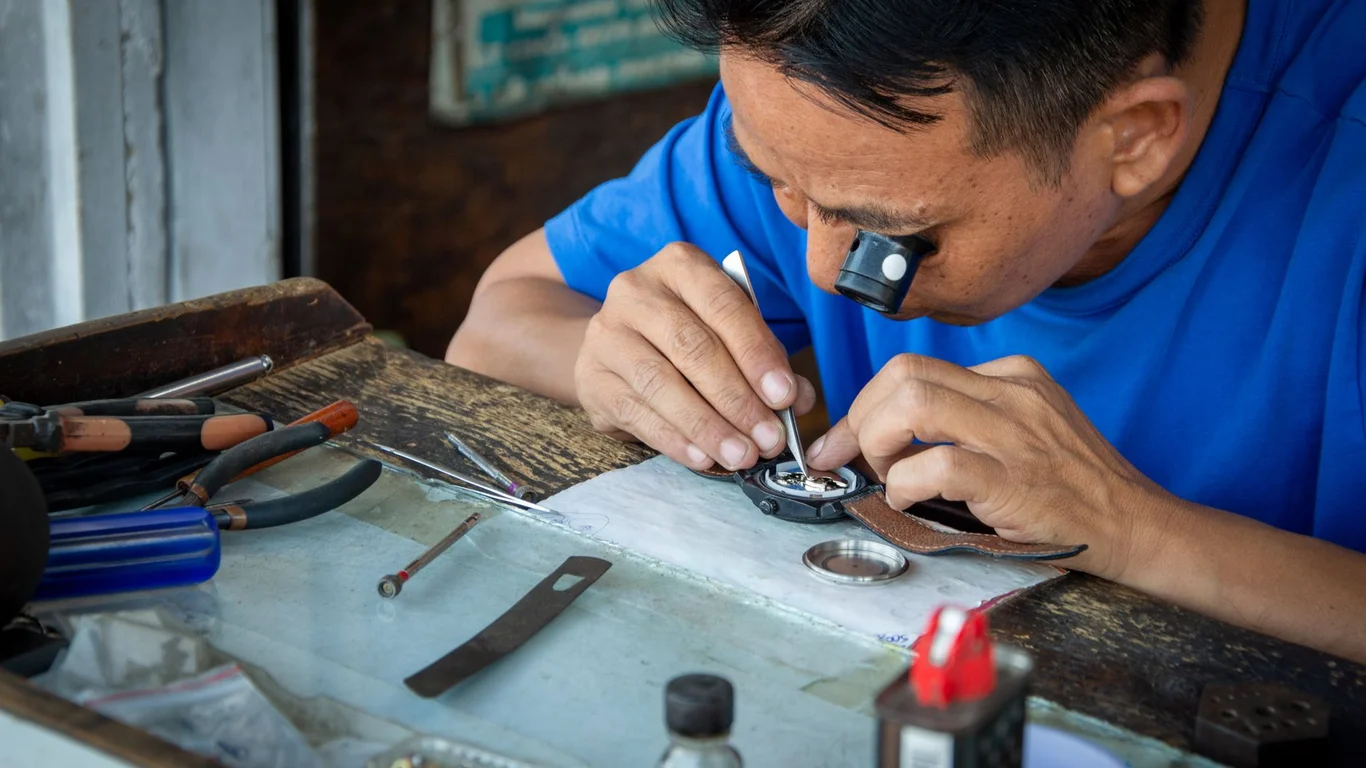
You pick up your mechanical watch, give it a few shakes to get it going, and set the time. A few hours later, you glance down and it’s stopped. Or it’s running five minutes fast. Or the rotor sounds like a maraca. If you’re staring at your watch wondering what went wrong, you’re likely dealing with one of the most common movement families in modern watches: the Sellita SW200, SW300, or SW500. These Swiss workhorses power everything from micro-brand divers to established luxury names, and when they act up, the symptoms are usually predictable. This guide walks you through the most common Sellita SW200, SW300, and SW500 problems, what causes them, and—most importantly—whether you can fix it at home or need to hand it over to a professional.
Quick Overview: What the Sellita SW200 / SW300 / SW500 Family Is and Where It’s Used
Before diving into troubleshooting, it helps to understand what you’re working with. The Sellita SW200, SW300, and SW500 are Swiss-made automatic movements that closely mirror the architecture of ETA’s 2824, 2892, and 7750 families, respectively. Sellita started as a parts supplier for ETA and later produced their own versions after ETA restricted movement sales to third parties.
The SW200 is a 26-jewel, 28,800 bph workhorse with a 38-hour power reserve. You’ll find it in watches from Oris, Sinn, Christopher Ward, Steinhart, and countless micro-brands. The SW300 is the thinner, higher-end sibling—25 jewels, same beat rate, but a svelte 3.6mm height versus the SW200’s 4.6mm. It appears in watches like the Tudor Black Bay 36 and certain Monta models. The SW500 is the chronograph heavyweight—a cam-switched, 28,800 bph movement with 25 jewels and a 48-hour power reserve, found in many entry-to-mid-level Swiss chronographs.
The SW200 and ETA 2824 share the same mainplate and wheel train layout, meaning many replacement parts and even complete movements can swap between the two. The SW300 is a direct competitor to the ETA 2892, while the SW500 is functionally identical to the Valjoux 7750. This cross-compatibility is a lifesaver for hobbyists hunting for spare parts.
Watch Stopped Completely: Most Likely Causes and What to Check First
Your watch was running fine yesterday, and now it’s dead on your wrist. Don’t panic—a stopped movement doesn’t always mean a broken one. The first thing to check is whether it’s simply run out of power. If you haven’t worn the watch in 36-48 hours (SW200/SW300) or 48 hours (SW500), the mainspring is fully unwound. Give it 30-40 firm shakes or wind the crown 20-30 turns and see if it starts again.
If it still won’t run, the issue is likely mechanical. The most common culprit on Sellita movements is a dislodged or broken automatic winding bridge screw. These tiny screws can back out over time, especially on watches that experience regular shock. A loose screw can jam the rotor or even fall into the gear train, stopping everything dead.
Another frequent cause: a broken mainspring. This is rare on newer movements but happens on watches that haven’t been serviced in 5-7 years. The mainspring can snap or lose its tension, leaving the movement with zero power reserve. You’ll know this is the case if the crown winds freely with no resistance and the watch still doesn’t run.
If your watch stopped after a drop or hard knock, do not keep shaking it or winding it. A broken balance staff or a dislodged jewel can cause further damage if you force the movement. Set the watch aside and inspect it with a loupe before attempting anything else.
Finally, check the crown position. If the crown is pulled out to the time-setting position, the watch won’t run—that’s normal. But if the crown feels loose or won’t stay in the winding position, the keyless works (the mechanism that controls crown positions) may have failed. That’s a professional repair.
Running Fast or Slow (Losing/Gaining Time): Common Causes
If your Sellita-powered watch is gaining or losing more than 10-15 seconds per day, something is off. The first and easiest thing to rule out is magnetization. Mechanical watches are susceptible to magnetic fields from everyday items like laptop speakers, magnetic clasps, refrigerator magnets, and even some handbags. A magnetized balance spring causes the watch to run fast—sometimes dramatically so, like gaining 5-10 minutes per day.
You can check for magnetization at home with a cheap compass or a dedicated demagnetizer tool. Place the watch near a compass; if the needle swings wildly, it’s magnetized. A quick pass through a demagnetizer usually fixes it in seconds. No special skills required.
If you don’t own a demagnetizer, many watchmakers will demagnetize your watch for free or for a small fee. It’s a 30-second job. Don’t buy a cheap demagnetizer from a random online seller without checking reviews—some are too weak to work or too strong and can damage the hairspring.
If demagnetization doesn’t solve the accuracy problem, the next suspects are positional error and amplitude. Sellita movements are regulated at the factory to run within COSC-like tolerances, but they can drift over time. A watch that runs fast in one position (e.g., dial up) and slow in another (crown down) typically needs a regulation adjustment. This involves moving the regulating pins on the balance cock to speed up or slow down the hairspring’s effective length.
Low amplitude—the degree of rotation of the balance wheel—can also cause timekeeping issues. A healthy SW200 should have an amplitude of 270-310 degrees when fully wound. Below 220 degrees, the watch will start losing time unpredictably. Low amplitude usually means the movement needs cleaning and re-oiling, not just regulation. This is not a home fix.
Rotor Noise or Rattling: What’s Normal vs a Real Problem
The Sellita SW200 is notorious for having a loud, sometimes rattly rotor. If you’ve ever owned a watch with an SW200, you’ve probably noticed it—a distinct whirring or clicking sound when you move your wrist. In most cases, this is normal. The SW200 uses a unidirectional winding system with a large, heavy rotor that spins freely in one direction. That free-spinning action creates noise, especially in watches with solid casebacks that don’t dampen sound.
However, there’s a difference between “normal rotor noise” and a genuine problem. If the rotor sounds like it’s scraping against the inside of the caseback, or if there’s a metallic grinding noise, you likely have a loose rotor screw or a worn rotor bearing. The SW200’s rotor is held in place by a single screw on a ball bearing. That screw can back out over time.
On the SW300, rotor noise is usually less pronounced because the movement is thinner and uses a different rotor design. But if you hear a rattling sound on an SW300, check the rotor screw first. On the SW500 chronograph, the rotor is heavier and can produce a noticeable wobble when the watch is moved quickly. Some rattling is normal due to the chronograph mechanism’s additional levers and springs.
To check for a loose rotor, remove the caseback (if you have the right tools and a steady hand) and gently press on the rotor with a toothpick. If it moves up and down or wobbles side to side, the screw is loose. Tightening it with a proper screwdriver is a safe home fix—just don’t overtighten.
Never use metal tweezers or a screwdriver to pry at the rotor. You can scratch the movement or bend the rotor. If you’re not comfortable removing the caseback, take it to a watchmaker. A loose rotor screw is a five-minute fix for a pro and should cost very little.
Winding Failure (Crown Doesn’t Wind or Hand-Wind Feels Loose): Causes
You turn the crown and feel nothing—no resistance, no clicking, no winding. Or the crown turns freely but the watch doesn’t wind at all. This is a classic Sellita SW200/SW300 problem, and it usually points to one of two issues: a broken mainspring or a failed automatic winding module.
If the crown turns with zero resistance and the watch doesn’t run after winding, the mainspring is likely broken. The hook at the end of the spring that catches the barrel wall has snapped off. This requires replacing the mainspring—a job for a watchmaker, as the barrel needs to be opened and the new spring lubricated properly.
If the crown feels gritty, stiff, or skips, the problem is in the keyless works. This is the set of levers and springs that engage the crown for winding, setting, and date adjustment. A common failure is the setting lever spring breaking or slipping out of position. This can happen if someone forced the crown while setting the time or date, or if the watch took a hard knock. You’ll notice the crown may pull out too far or not click into position properly.
On the SW500 chronograph, winding failure can also be caused by a stuck chronograph mechanism. If the chronograph is running when you try to hand-wind, the additional friction from the cam system can make winding feel heavy or impossible. Always stop the chronograph before winding.
If your watch won’t wind but the rotor still spins, the automatic winding might still work. Give it 20-30 minutes of wrist time and see if it starts running. If it does, the mainspring is intact and the issue is in the manual winding gear train. That’s still a pro fix, but at least you can wear the watch in the meantime.
Date/Day-Change Issues if Applicable to This Family
The Sellita SW200 and SW300 both offer date complications, and the SW500 adds a day-date display. Date-change problems are frustrating because they’re often intermittent—the date flips at 3 AM instead of midnight, or it gets stuck halfway between two numbers.
The most common cause is a misaligned date wheel or a bent date jumper spring. This usually happens when someone sets the date manually between 9 PM and 3 AM, when the date-change mechanism is engaged. Forcing the quick-set date during this window can bend the jumper or strip the teeth on the date wheel. The fix involves removing the hands and dial to access the date mechanism—definitely a professional job.
If the date changes but at the wrong time (e.g., at 4 AM), the issue is in the hour wheel or the date driving wheel. This can sometimes be corrected by advancing the time 12 hours, but if the misalignment is mechanical, the movement needs to be disassembled.
For the SW500, the day-date mechanism is more complex. If the day won’t advance but the date does, the day wheel’s driving spring may be broken. If both are stuck, the problem is likely in the calendar plate or the intermediate wheel. These parts are delicate and require careful handling.
Comparison Table: Symptom → Likely Cause → Home-Fixable or Professional-Only
| Symptom | Likely Cause | Home Fix? |
|---|---|---|
| Watch stopped, won’t start after winding | Broken mainspring or dislodged balance staff | Professional only |
| Watch stopped, crown winds with no resistance | Broken mainspring (hook snapped) | Professional only |
| Watch runs fast (minutes per day) | Magnetized balance spring | Home: demagnetize |
| Watch runs slow (10-30 sec/day) | Low amplitude or need regulation | Regulation: home (if skilled); low amplitude: pro |
| Rotor noisy, scraping sound | Loose rotor screw or worn bearing | Home: tighten screw; bearing: pro |
| Rotor rattles but no scraping | Normal SW200 behavior | No fix needed |
| Crown won’t wind, feels loose | Broken mainspring or keyless works failure | Professional only |
| Crown winds but feels gritty | Dirty or dry winding gears | Professional only (needs cleaning) |
| Date changes at wrong time | Hour wheel misalignment | Home: try advancing 12h; if persists, pro |
| Date stuck halfway between numbers | Bent date jumper or damaged date wheel | Professional only |
| Day/date both stuck on SW500 | Calendar plate or intermediate wheel issue | Professional only |
What a Hobbyist Can Safely Check at Home vs When to Send It to a Watchmaker
If you’re a hobbyist with basic tools—a caseback opener, a demagnetizer, a loupe, and a set of precision screwdrivers—there are several things you can safely do before calling a professional. Demagnetizing a watch is the most obvious. It costs nothing, takes seconds, and fixes one of the most common accuracy issues. Checking and tightening a loose rotor screw is also within reach if you’re comfortable removing the caseback.
You can also perform a simple amplitude check using a phone app like Watch Accuracy Meter or a dedicated timing machine. While phone apps aren’t as precise as professional equipment, they can tell you if amplitude is catastrophically low (below 200 degrees) or if the beat error is excessive (over 1.0 ms). If amplitude is fine but the watch is running fast or slow, you can attempt regulation by moving the regulating pins. This is delicate work—one slip and you can damage the hairspring—but it’s a learnable skill.
Here’s what you should never attempt at home: opening the mainspring barrel, replacing the balance staff, repairing the keyless works, or servicing the chronograph module on an SW500. These operations require specialized tools, lubricants, and experience. A botched keyless works repair can turn a $50 fix into a $200 one.
If your watch is still under warranty, do not open it. Even a simple rotor screw tightening can void the warranty if the watchmaker sees tool marks. Send it to the manufacturer or an authorized service center first.
When in doubt, ask yourself: is the watch running at all? If yes, and the issue is accuracy or noise, it’s worth a home check. If the watch is stopped, the crown is broken, or the date mechanism is physically stuck, save yourself the frustration and send it to a professional. A standard service for an SW200 runs roughly $200-$350, while an SW500 chronograph service can be $400-$700. That’s not cheap, but it’s cheaper than replacing a movement because you tried to fix a broken mainspring with a pair of pliers.
The Sellita SW200, SW300, and SW500 are robust, well-designed movements that give years of reliable service with proper care. Most problems are predictable and have straightforward causes. By working through the symptoms methodically—starting with the simplest fixes like demagnetization and power reserve checks—you can often diagnose the issue yourself and decide whether it’s a five-minute home adjustment or a trip to the bench.
Frequently Asked Questions
Are Sellita SW200, SW300, and SW500 movements generally reliable, or do they have known weaknesses?
These movements are widely considered reliable workhorses, often compared favorably to their ETA counterparts. The SW200 and SW300 are very dependable for daily wear, though the SW500—being a chronograph with more moving parts—can be more prone to issues like jammed pushers or sticky date wheels if not serviced regularly. The most common failures across the family are predictable: broken rotor screws, magnetized hairsprings, and dried-out lubricants after several years of use.
What does a typical service cost for a Sellita SW200, SW300, or SW500 movement?
A standard service for an SW200 or SW300 typically runs between $200 and $350, depending on your watchmaker and whether any parts need replacing. For the chronograph SW500, expect a higher range of $400 to $700 due to the additional complexity and labor involved. These are ballpark figures, so always get a quote upfront before authorizing work.
Can I fix a stopped automatic movement myself by just winding or shaking it?
Yes, this is often the first and simplest step to try. Give the crown a full 30 to 40 manual turns to ensure the mainspring has enough power, then gently shake the watch for a few seconds to get the rotor moving. If the watch still doesn’t start, the issue is likely something more serious—like a broken mainspring, a stuck balance wheel, or a jammed gear train—and you’ll need a watchmaker to open it up.
🛒 Shop Compatible Parts
Prices and stock verified daily by our affiliate partners. As an affiliate, WatchPartsFit may earn a commission on qualifying purchases at no extra cost to you.
Check Compatibility First →
watchpartsfit
WatchPartsFit editor covering mechanical watch strap compatibility, movement repair, and part-replacement guides.