
Ceramic Watch Strap Crack Repair: Can It Be Repaired?
 11 min read
2,034 words
11 min read
2,034 words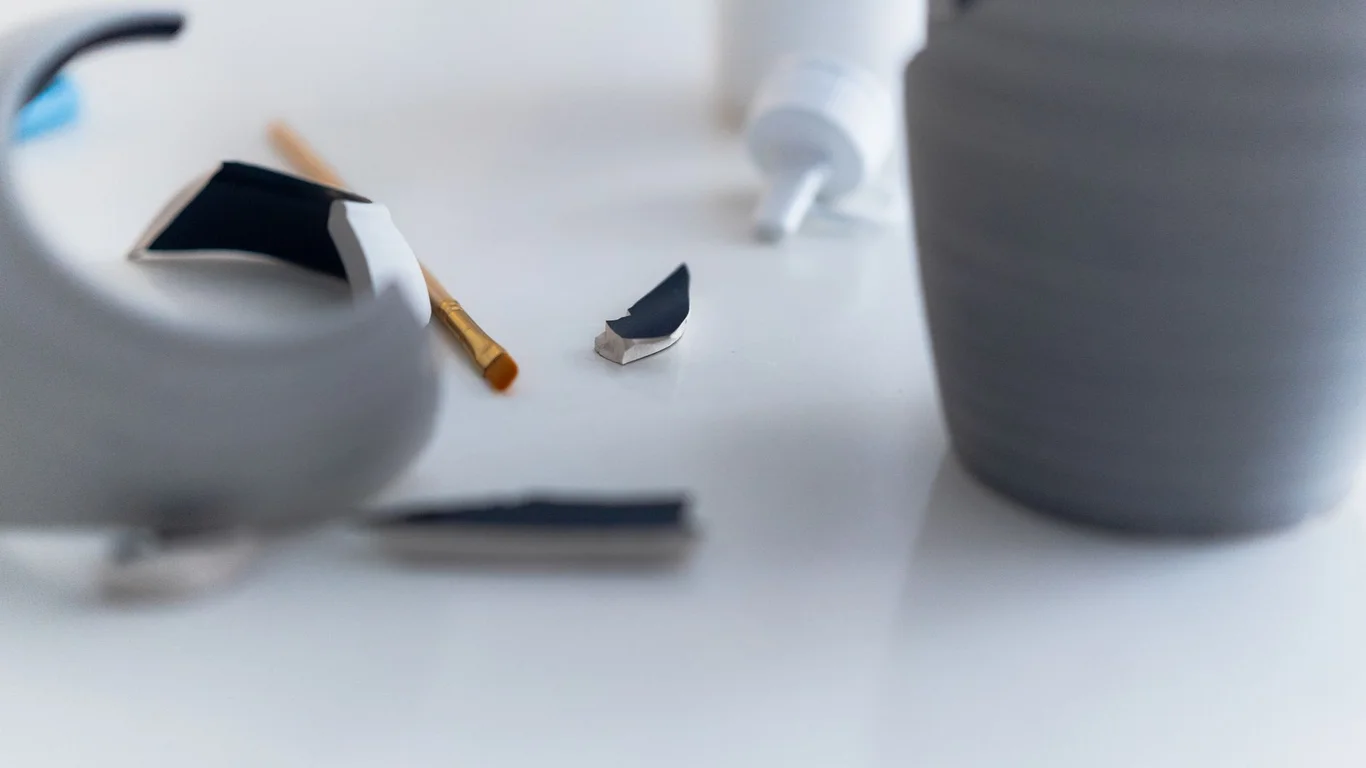
So you’re staring at a hairline crack in your ceramic watch bracelet, hoping it’s just a scratch. Maybe you tapped it against a door frame, or it took a spill off the nightstand. Either way, that white or black link now has a fracture, and your stomach is sinking because you know ceramic isn’t cheap. The honest truth is that ceramic damage is a different beast than a dented steel link. This guide walks you through exactly why that crack happened, whether there’s any realistic repair path, and — most importantly — what your wallet is looking at for a fix.
Why ceramic cracks and chips instead of denting like metal
Ceramic watch bracelets are popular for a reason: they’re scratch-resistant, hypoallergenic, and keep their polish for years. But that hardness comes with a trade-off. Ceramic is extremely hard but also brittle. Think of it like a dinner plate — drop it, and it shatters or chips rather than bending.
Metal links deform under impact. A steel bracelet hit hard enough will show a gouge or a dent, but the structure of the link usually stays intact. Ceramic, by contrast, has very little “give.” When the force exceeds the material’s strength, the energy releases as a crack or a chip. That’s why a relatively mild knock can leave you with a fissure running through a link.
This brittleness is inherent to the material itself. High-tech ceramic (often zirconium oxide or silicon nitride) is sintered at extreme temperatures, creating a dense, glass-like structure. It’s fantastic for everyday wear against abrasive surfaces, but poor at absorbing sudden point impacts. If you see a crack, it’s not a surface blemish — it’s a structural failure in the material.
Some modern ceramic formulas (like Rado’s Ceramos or certain Rolex Cerachrom bezels) are slightly tougher than earlier generations, but they still cannot be bent or hammered back into shape. The crack is permanent.
Why ceramic generally can’t be meaningfully repaired at home
If you’re hoping to fill that crack with super glue or epoxy and call it a day, stop right there. Ceramic repair at home is a myth for structural damage. Adhesives won’t bond to the sintered surface in any lasting way, and the crack will almost certainly propagate under normal wrist movement or the tension of the bracelet’s pins.
There are specialty ceramic repair kits on the market — usually two-part epoxies marketed for bathroom tile or auto ceramic repairs. They might work for a cosmetic chip on a watch case that never sees stress, but on a bracelet link that flexes and bears load every time you bend your wrist? They fail. The repaired area will look obvious, feel rough, and likely crack again within days.
Professional ceramic welding or laser sintering exists in industrial contexts, but it’s not a service offered by watchmakers. The equipment is expensive, the process risks thermal shock, and the color match is nearly impossible to get right. No reputable watch repair shop will attempt it on a bracelet link.
Do not attempt to sand or grind a chipped ceramic link yourself. Ceramic dust is extremely fine and abrasive — it can damage your watch’s movement if inhaled or embedded in the case. It also voids any remaining warranty.
Individual link replacement — when it’s possible and when the whole bracelet needs replacing
Here’s the best-case scenario: if your ceramic bracelet uses removable links (like many Rado, Omega, or high-end fashion watches), you can often replace just the damaged link. This is the cheapest path forward, assuming you can source a single link. Many manufacturers sell individual links for bracelets that use standard pin-and-collar or screw-link construction.
But there’s a catch. Some ceramic bracelets are not designed for link-by-link service. Integrated bracelets (where the links are fused or riveted together permanently) may require replacing the entire bracelet. This is common on certain luxury sport models where the bracelet is one continuous ceramic piece with no removable segments.
To determine which scenario you’re in, look closely at the bracelet’s construction. If you see visible pins, screws, or collars at each link junction, individual replacement is likely possible. If the bracelet appears seamless or uses hidden pins that are pressed in permanently, you’re probably looking at a full bracelet swap.
| Bracelet type | Individual link replacement possible? | Typical brands/models |
|---|---|---|
| Pin-and-collar links | Yes — if you can source the link | Rado True, Omega Seamaster ceramic, some TAG Heuer |
| Screw-link construction | Yes — easier to service yourself | Rolex Yacht-Master 42 (ceramic), some Hublot Big Bang |
| Integrated / fused ceramic | No — full bracelet replacement required | Certain Rado Ceramica models, some Chanel J12 older versions |
| Ceramic links with metal inserts | Yes — but only the ceramic shell can be replaced | IWC ceramic pilot bracelets, some Breitling |
If you have a proprietary or integrated design, brace yourself for a larger bill. Some brands intentionally make bracelets non-serviceable at the link level to drive customers toward full replacements. It’s frustrating, but it’s the reality of ceramic luxury goods.
Before ordering a replacement link, measure the width of the bracelet at the lug (in mm) and count the total number of links. Some brands use different link sizes for the same model year to year — having exact measurements avoids a costly return.
Sourcing OEM ceramic links/bracelets and realistic costs
Once you’ve confirmed that individual link replacement is possible, the next step is finding the part. OEM (original equipment manufacturer) links are your safest bet — they match the color, finish, and tolerances exactly. Aftermarket ceramic links exist for some popular models (especially Rado and Omega), but color matching is notoriously inconsistent. A “black” ceramic from one factory can look charcoal or glossy next to your bracelet’s matte finish.
To source OEM links, start with an authorized dealer or the brand’s service center. Many brands (like Rado and Omega) have online parts portals where you can order links directly. Be prepared to provide your watch’s reference number, which is usually engraved on the case back. If you don’t have the reference, a good AD can look it up from the serial number.
Realistic costs for a single ceramic link range from roughly $80 to $250 depending on the brand and complexity. Full ceramic bracelet replacements start around $400 for entry-level luxury (Rado) and can climb past $1,500 for models from Rolex, Hublot, or Audemars Piguet. Labor to install a link (if you don’t do it yourself) adds another $30–$60 at a watchmaker.
$80–$150
$150–$250
$400–$700
$800–$1,500+
If the bracelet is discontinued, your options narrow considerably. Some independent watchmakers specialize in salvaging ceramic parts from donor watches, but that’s a long shot. In that case, you may need to consider a custom leather or rubber strap as a permanent alternative — not ideal, but functional.
How to prevent further cracking while you sort out a repair or replacement
You have a cracked link, and you’re waiting for a replacement part or a service appointment. In the meantime, you need to keep that crack from spreading — because a full bracelet failure while you’re wearing the watch is a disaster waiting to happen.
First, stop wearing the watch. Seriously. Every flex of the bracelet puts tension on the crack, and ceramic cracks propagate fast. A hairline today can become a full break tomorrow, and a broken bracelet means your watch hits the floor. That’s a much more expensive problem.
If you absolutely must wear the watch (and we don’t recommend it), remove the damaged link entirely if possible. Most bracelets allow you to take out one link without affecting the clasp function. You’ll end up with a slightly tighter fit, but it’s safer than risking a catastrophic break. Use a spring bar tool or a screwdriver set to remove the pin or screw at the cracked link.
Never wear a watch with a cracked ceramic link near water or during physical activity. A sudden break can cause the watch to fall and hit concrete, tile, or pavement — almost certainly destroying the case and movement too.
If you can’t remove the link, wrap the bracelet in a soft cloth and store it in a padded box until the replacement arrives. Avoid stacking it with other watches or metal objects. Ceramic can scratch metal, but it can also chip further if it knocks against another hard surface.
Whether a warranty or manufacturer service covers this
Here’s the short answer: almost never. Standard watch warranties cover manufacturing defects — things like a faulty clasp, a pin that falls out, or a link that cracks under normal use due to a material flaw. They do not cover accidental damage, impacts, or drops. If you cracked your ceramic bracelet by bumping it into a counter, that’s on you.
Some brands offer a “ceramic guarantee” or a goodwill repair policy, but these are rare and usually only apply within the first year or two of ownership. Rado, for example, has been known to replace cracked ceramic links at a reduced cost if the watch is under two years old and the damage is minor. But it’s not a written policy — it’s a case-by-case decision by the service center.
If you have a comprehensive insurance policy on your watch (like through Jewelers Mutual or a standalone watch insurance plan), accidental damage to the bracelet is typically covered. You’ll pay your deductible (usually $50–$200), and the insurer covers the rest. This is often the most cost-effective route for high-end ceramic watches, especially if the bracelet costs over $1,000 to replace.
If you bought the watch with a credit card that offers purchase protection (like many Visa Signature or Mastercard World Elite cards), you may have accidental damage coverage for 90–120 days from purchase. Check your card benefits — it’s a long shot, but it’s saved some owners from a $1,500 bill.
Manufacturer service centers will almost always quote you for a full bracelet replacement if the crack is more than a superficial chip. They won’t attempt to repair the ceramic itself. Expect a turnaround time of 4–12 weeks, depending on the brand and parts availability. Independent watchmakers can sometimes source OEM links faster, but they cannot repair the ceramic either.
At the end of the day, a cracked ceramic bracelet is a frustrating but straightforward problem. There is no DIY fix, no epoxy miracle, and no cheap shortcut. Your real choices are replacing the individual link (if possible) or replacing the entire bracelet. The sooner you accept that and start sourcing the part, the sooner your watch is back on your wrist. Ceramic is beautiful, but it’s not indestructible — and that’s the price you pay for a scratch-free finish that lasts a lifetime.
Frequently Asked Questions
Can a cracked ceramic watch link be glued or repaired?
No, you cannot reliably glue or repair a cracked ceramic watch link. Ceramic is extremely brittle and does not bond well with adhesives — any glued repair will fail under the tension of normal wear, potentially causing the bracelet to separate and your watch to fall. The only safe solution is to replace the cracked link (or the entire bracelet) with an OEM part.
How much does replacing a single ceramic bracelet link typically cost?
Replacing a single ceramic link usually runs between $150 and $400 for most mid-range to luxury brands, plus labor if you have a watchmaker install it. For high-end brands like Rolex or Hublot, that price can climb to $500–$800 per link, and you may face a 4–12 week wait for the part to arrive from the manufacturer.
Why do ceramic watch bracelets crack in the first place?
Ceramic cracks because it is extremely hard but also brittle — it resists scratching beautifully, but a sharp impact or a hard knock against a metal edge can create a hairline fracture that grows over time. Temperature shocks, such as going from extreme cold to hot water, can also stress the material, and even a tiny manufacturing flaw can turn into a crack after months of wrist movement.
🛒 Shop Compatible Parts
Prices and stock verified daily by our affiliate partners. As an affiliate, WatchPartsFit may earn a commission on qualifying purchases at no extra cost to you.
Check Compatibility First →
watchpartsfit
WatchPartsFit editor covering mechanical watch strap compatibility, movement repair, and part-replacement guides.