
Engraving Removal From Caseback: What’s Realistic
 11 min read
2,150 words
11 min read
2,150 words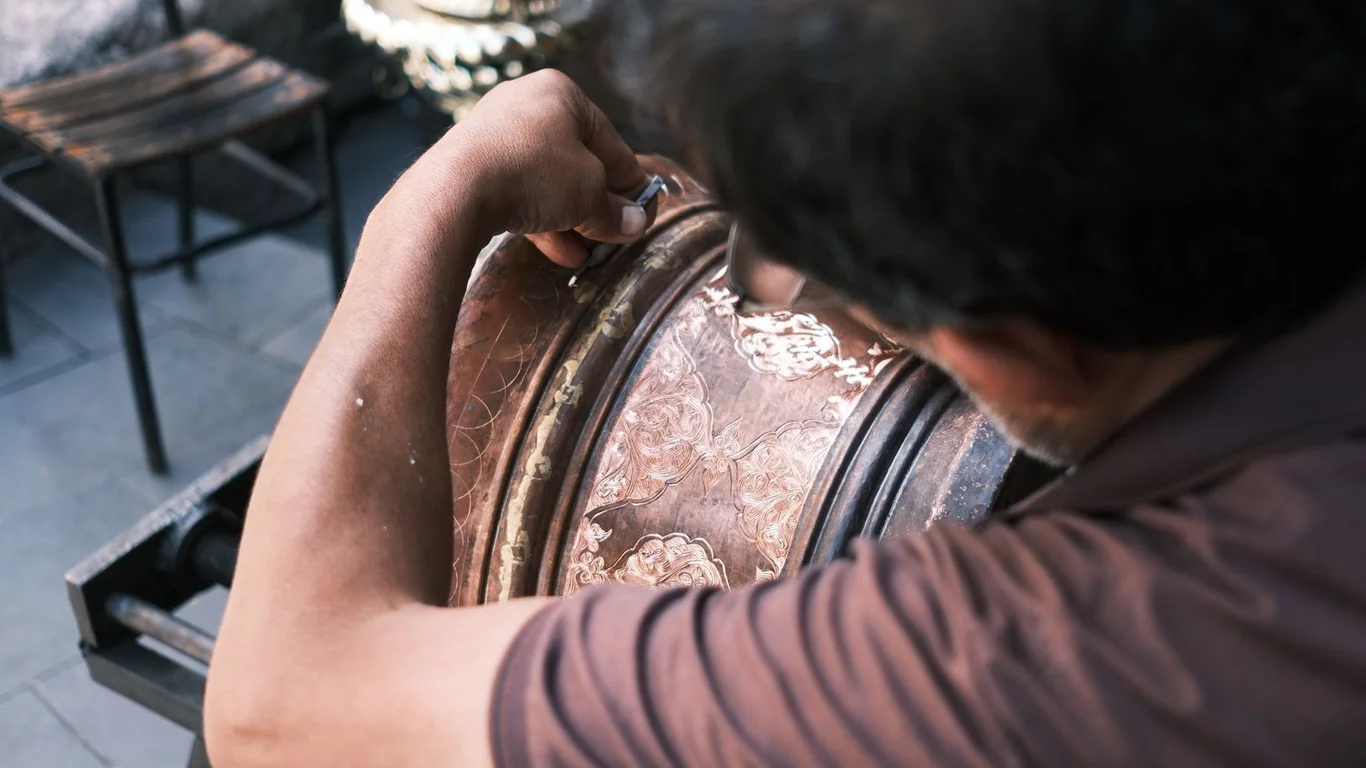
If you’re staring at the back of a watch you just bought secondhand and wondering who “To Dad, Love Cheryl, 1997” is, you’re not alone. Maybe you picked up a great deal on a vintage Omega or a modern Seiko, only to flip it over and find a sentiment that means nothing to you. Or perhaps you received a watch as a gift, but the engraving was a misspelled name or a date you’d rather forget.
That engraving feels like a permanent stain on an otherwise perfect piece. And your first instinct is probably to find someone who can just “erase” it. But here’s the reality check you need before you hand your watch to a jeweler or grab a polishing cloth: engraving removal from caseback is almost never erasure. It’s removal of material. And that changes everything about how you approach this.
Why Removal Generally Means Removing Material
Engraving isn’t printed on the caseback. It’s physically carved into the metal. Whether it was done by a laser, a rotary tool, or a hand graver, the result is the same: a groove that displaces metal to create the text or design. The only way to make that groove disappear is to remove enough surrounding metal to level the surface again.
This is the single most important thing to understand. You are not erasing ink. You are machining down the caseback until the deepest point of the lettering is gone. That means the entire surface of the caseback gets thinner by exactly the depth of the engraving, plus a small margin for a clean finish.
Tip:
To get a rough sense of engraving depth, run your fingernail across the lettering. If you can feel a distinct ridge or dip, that engraving is at least 0.1mm deep. Laser engravings can be shallower — sometimes 0.05mm — but hand or machine-cut letters often go 0.2mm or deeper.
So when you ask a watchmaker to “remove personalized engraving watch back,” what they’re really hearing is “please machine down my caseback.” And that carries consequences you need to weigh carefully.
How Deep Engravings Compare to Case Thickness
The real risk here isn’t just cosmetic. It’s structural. A caseback has a finite amount of metal before you start compromising its integrity, particularly its ability to seal against moisture and dust.
Let’s look at typical numbers. A modern stainless steel caseback is usually between 1.0mm and 1.5mm thick. Vintage watches can be thinner — sometimes as little as 0.8mm. Meanwhile, a deep hand engraving may cut 0.2mm to 0.3mm into the surface. That’s not a trivial percentage of your total thickness.
| Engraving Type | Typical Depth | Typical Caseback Thickness (SS) | Material Loss After Removal |
|---|---|---|---|
| Laser engraved (shallow) | 0.03 – 0.08 mm | 1.0 – 1.5 mm | 0.08 – 0.15 mm (including finishing) |
| Rotary machine engraving | 0.10 – 0.20 mm | 1.0 – 1.5 mm | 0.15 – 0.30 mm |
| Hand engraved (deep) | 0.15 – 0.35 mm | 0.8 – 1.2 mm (vintage) | 0.25 – 0.50 mm |
Notice the last row. On a vintage watch with a 0.8mm caseback, removing a deep hand engraving could mean losing nearly two-thirds of the metal. That’s not a polish job. That’s a structural change. The caseback becomes thinner, more flexible, and far more likely to deform under pressure or during a battery change.
Caution:
Water resistance is almost always compromised after significant caseback thinning. The gasket channel depth changes, and the caseback may no longer press or screw down with the same force. If your watch is a diver or even a daily wearer that sees rain or handwashing, this is a serious consideration.
Once you’ve confirmed the depth situation, the next question is whether the type of engraving on your watch makes removal any easier or harder.
Laser Engraving vs Hand or Machine Engraving
Not all engravings are created equal. The method used to create the text dramatically affects how difficult it is to remove and how clean the result will be.
Laser engravings are generally shallower and more precise. A laser ablates a thin layer of metal, creating a frosted or dark mark that sits mostly on the surface. Because the depth is often under 0.1mm, you can sometimes polish out engraving watch case with less material loss. The downside? Lasers can also create microscopic heat-affected zones in the metal that may not take a uniform polish afterward. You might end up with a ghost of the text visible under certain lighting.
Rotary machine engravings use a spinning carbide or diamond bit to cut a V-shaped or U-shaped groove. These are deeper and wider than laser marks. The groove has a distinct bottom and walls that reflect light differently from the surrounding surface. Removing this requires taking the caseback down to the bottom of that V-groove, which means more material loss.
Hand engravings are the deepest and most variable. A skilled engraver uses a graver to push curls of metal out of the cut. These cuts can be irregular in depth and width, and they often leave raised burrs along the edges. Removing a hand engraving is the most aggressive process, and it’s where you’re most likely to run into the thickness limits we discussed above.
Good to know:
Some laser engravings are actually filled with a dark pigment or oxide to make them more readable. That pigment can seep into the grain of the metal, and even after the surface is polished down, a faint shadow may remain. Always ask the watchmaker if they’ve dealt with filled engravings before.
So the method matters, but it doesn’t change the fundamental rule: material must be removed. What it does change is how much material and how predictable the final result will be.
Resale Value Considerations
Here’s a twist you might not expect. Sometimes an engraving — even one that means nothing to you — can actually help the watch’s value. This is especially true for vintage pieces with documented provenance or limited editions where the original owner’s name is part of the history.
But let’s be realistic: the vast majority of caseback engravings are generic gift sentiments. “Happy Birthday, Steve” on a 1990s Rolex Datejust doesn’t add value. In fact, it often reduces the pool of buyers because most people don’t want someone else’s name on their watch. So for most secondhand buyers, removing that engraving is a net positive for resale.
The catch is how you remove it. A professionally polished caseback that removes the engraving but leaves the surface uniform and the caseback thickness within safe limits will generally increase the watch’s appeal. A botched removal that leaves a thin, wavy, or uneven caseback will destroy value. And a caseback that’s been polished so aggressively that the edges are rounded or the serial numbers are partially erased is a red flag to any knowledgeable buyer.
Leave engraving as-is
-30% to -10% vs. clean back
Professional polish removal
-5% to +10% vs. engraved
Over-polished / thinned
-50% or more
Full caseback replacement
+0% to +20% (if genuine)
Notice the best outcome isn’t always removal. Sometimes it’s replacement. Which brings us to the option most people overlook.
Realistic Alternative: Full Caseback Replacement
If your watch brand offers replacement casebacks, this is almost always the cleanest solution. No material removal. No thinning. No ghosting. You get a factory-fresh surface that looks exactly like the watch did when it left the showroom.
This is most realistic for modern watches from major brands. Seiko, Citizen, Omega, and Rolex all maintain parts inventories for current and recent models. For a Seiko SKX or a modern Tudor Black Bay, you can often order a new caseback through an authorized service center or a reputable parts dealer for anywhere from $30 to $150. For higher-end brands like Rolex or Patek Philippe, expect $200 to $600, and you may need to go through a full service to get the part.
Vintage watches are a different story. For a 1960s Omega Seamaster or a 1970s Heuer, the original caseback may be the only one that exists. Aftermarket reproductions exist for some popular models, but they rarely match the original stamping, font, or finish. In those cases, you’re often better off accepting the engraving or finding a donor watch for parts.
Tip:
Before you go down the removal or replacement path, check if the caseback has a serial number or model reference stamped into it. If it does, any polishing or replacement that removes or obscures that number can make future service or authentication much harder. Take a photo of the original caseback before any work begins.
Replacement also solves the water resistance problem. A new caseback comes with a fresh gasket and full original thickness. You don’t have to worry about whether the seal will hold. If your watch is a daily wearer or a diver, this is the safer route by a wide margin.
When It’s Simply Not Worth Attempting
There are situations where every option is bad, and the smartest move is to leave the engraving alone. Here’s how to recognize them.
Extremely deep hand engravings on thin vintage cases. We covered the numbers earlier. If your caseback is under 1.0mm and the engraving is 0.3mm deep, removal is not realistic. You’d be left with a fragile shell that risks cracking under normal wear.
Engravings that wrap around the edge of the caseback. If the text is near the outer circumference, polishing it out will alter the chamfer or the edge geometry. That changes how the caseback seats against the case middle, which can create a visible gap or a poor seal.
Casebacks with original brand markings that overlap with the engraving. Some vintage watches have the brand name, logo, or model number stamped in a circle around the edge. If the personalized engraving sits right over or between those marks, removing it may partially erase the original stamping. That kills both authenticity and resale value.
Watches with sentimental value to the previous owner but no market value. If the watch itself is a $100 quartz fashion piece, the cost of professional engraving removal (typically $75 to $200) exceeds the watch’s worth. In that case, you’re better off either wearing it with the engraving or selling it as-is and putting the money toward a watch that doesn’t need work.
Good to know:
Caseback engraving removal cost varies widely by market and method. A local jeweler with a polishing wheel might quote $30 to $50 for a quick pass, but they won’t measure depth or check water resistance afterward. A proper watchmaker who disassembles the watch, measures the caseback, and refinishes it correctly will charge $100 to $250. The cheaper option often costs more in the long run.
Sometimes the most honest advice is to live with the engraving. It’s a mark of the watch’s history. It doesn’t affect how the watch keeps time, and on a well-worn vintage piece, it can even add character. If you can reframe it as a conversation starter rather than a flaw, you might find it bothers you far less than you think.
The Bottom Line on Caseback Engraving Removal
Engraving removal from caseback is possible, but it’s never simple. You are trading metal for clean surface, and the trade only makes sense if you have enough metal to spare and a watchmaker who understands the limits. For modern watches with thick casebacks and shallow laser engravings, professional polishing is a viable option. For vintage watches with deep hand engravings, replacement or acceptance are usually the better paths.
Before you commit to any approach, take the watch to a reputable watchmaker — not a mall kiosk jeweler — and ask them to measure the caseback thickness and the engraving depth. Get their honest opinion on whether removal is safe. And if they say it’s too risky, listen. A watch with an unwanted engraving is still a working watch. A watch with a compromised caseback is a repair waiting to happen.
Frequently Asked Questions
Can any engraving be fully removed without weakening the caseback?
Not always. Deep hand-engraved inscriptions often cut far into the metal, and removing them completely would leave the caseback dangerously thin or even create a hole. Shallow laser engravings on thicker modern casebacks have a much better chance of full removal with professional polishing, but you still lose some metal in the process.
Is it cheaper to replace the caseback entirely than remove an engraving?
Often, yes — especially for common modern watches where OEM or aftermarket casebacks are readily available. The labor involved in careful polishing or laser welding to remove an engraving can easily exceed the cost of a new caseback. However, for vintage or rare models where finding a matching replacement is difficult, removal or acceptance may be the more practical path.
Does removing an engraving affect a watch’s resale value?
It depends on the watch and the quality of the work. On a common modern watch, a clean, professionally polished caseback typically improves resale value compared to one with an unwanted personal engraving. On a rare vintage piece, collectors often prefer an original engraved caseback — even with its history — over one that has been thinned or reworked, as that compromises originality and structural integrity.
🛒 Shop Compatible Parts
Prices and stock verified daily by our affiliate partners. As an affiliate, WatchPartsFit may earn a commission on qualifying purchases at no extra cost to you.
Check Compatibility First →
watchpartsfit
WatchPartsFit editor covering mechanical watch strap compatibility, movement repair, and part-replacement guides.